The Collection of Ghahvehkhaneh Paintings

Narratives of Epic and Faith

SCROLL DOWN

Narratives of Epic and Faith

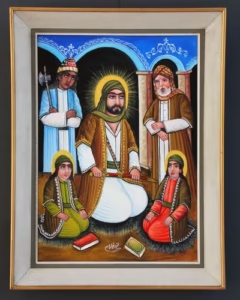
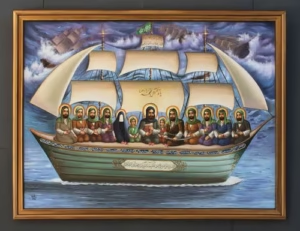
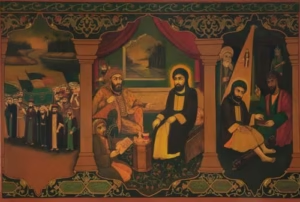
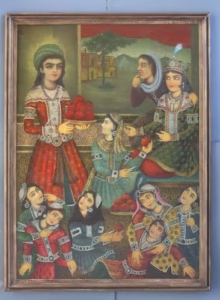
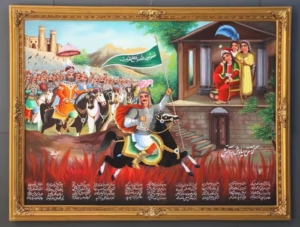
Ghahvekhane painting, an art form born from the common people, is a mirror that reflects the beliefs, aspirations, and stories of this land in a pure and unadorned manner. This style of painting, which reached its peak in the late Qajar and early Pahlavi periods, was shaped by epic, religious, and festive narratives and found its home in places like Ghahvekhanes, traditional gymnasiums (Zurkhanehs), and religious mourning venues. In this style, conventional painting principles such as light and shadow and precise details receive less attention. The images are simple and direct, and at times, time and place lose their conventional meaning, conforming instead to the people's imagination and beliefs. These characteristics have made Ghahvekhane painting a valuable source for sociological study and a deeper understanding of the beliefs and convictions of Iranians in the modern era.


Some Notable Treasury Items

Religious Paintings

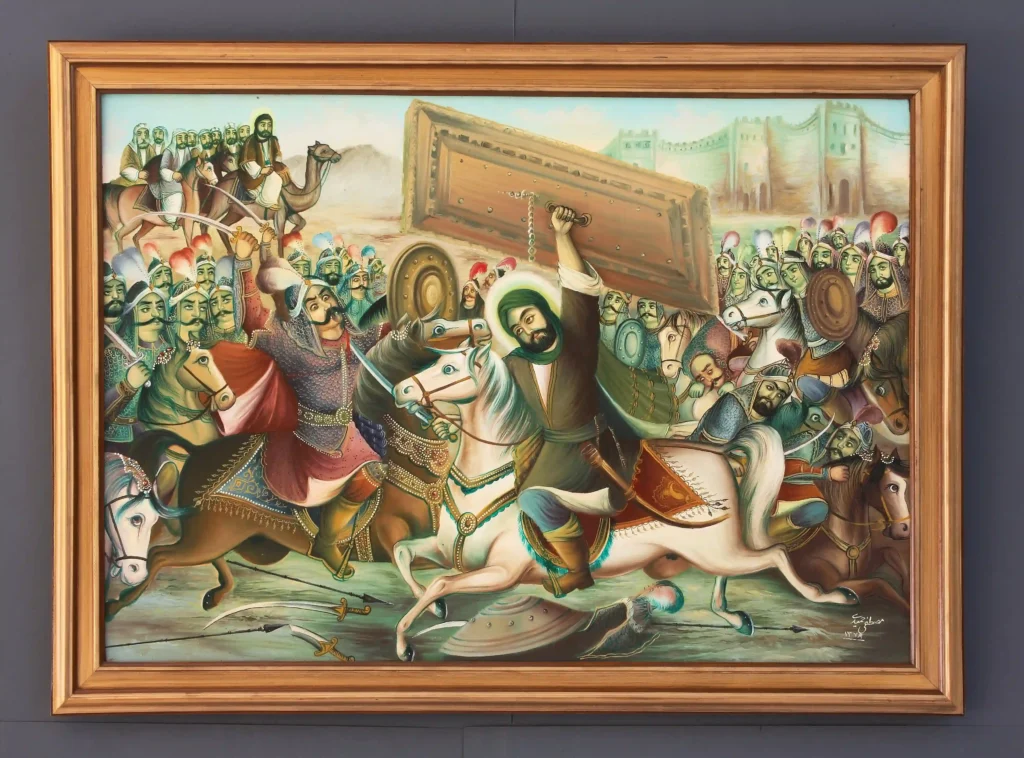
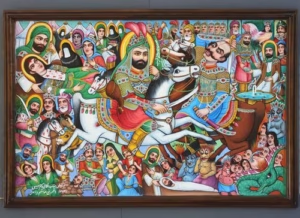
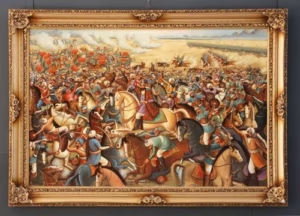
Religious paintings are a specific genre of Ghahvekhane art. This style, with its religious themes, especially the events of Karbala and the lives of the Imams, has a deep connection to the people’s beliefs and convictions. Inspired by the traditions of storytelling and passion plays (Ta’zieh), the painters of this style depicted religious scenes with a simple and emotional expression. The panel “The Conquest of Khaybar” by Master Mostafa Hamidi was created in 1999 in the Ghahvekhane style using oil paints. This valuable work portrays the event of the conquest of Khaybar by Imam Ali with a passionate and emotive expression.

The Conquest of India

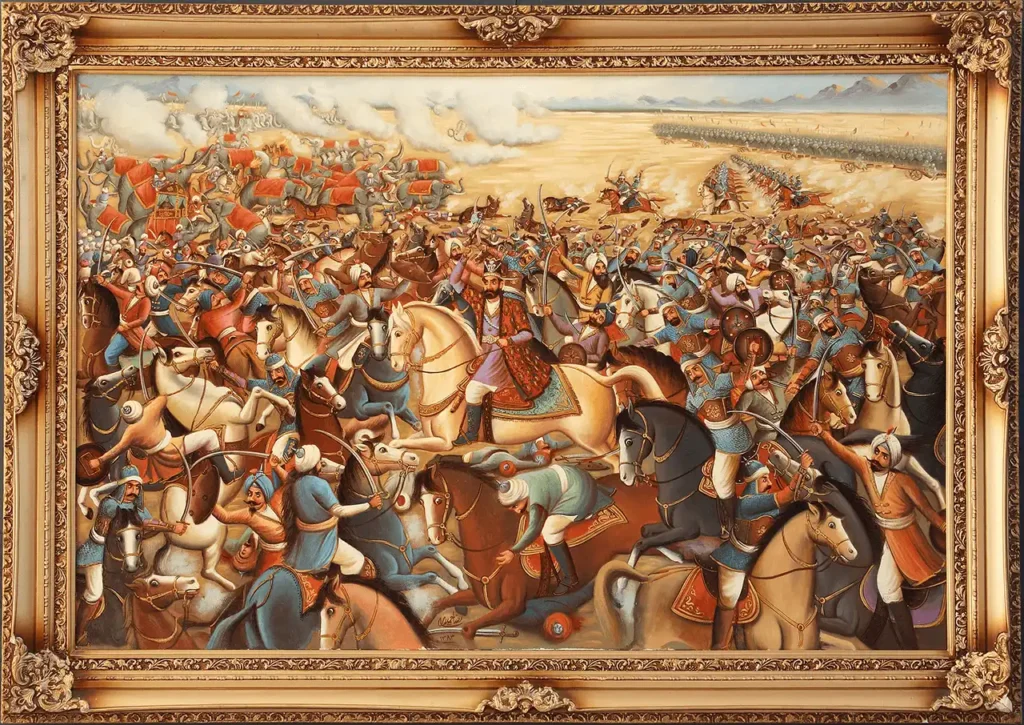
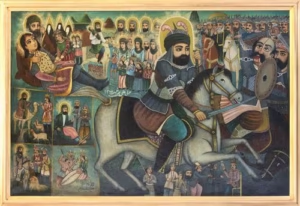
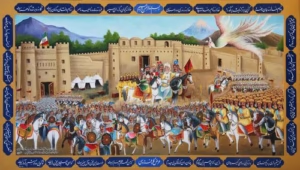
The panel “The Conquest of India” by Master Reza Hamidi, in the Ghahvekhane painting style, recounts a historical and epic event in a simple, fluid, and emotive language. In this work, warm and vibrant colors, the bold movement of warriors, and the masterful rendering of fine details are prominent. Drawing on the Iranian tradition of Ghahvekhane painting, Master Reza Hamidi has depicted a glorious and heroic tale, highlighting Iranian identity and drawing the viewer into the midst of a thrilling and heroic story.

Naqqali and Shahnameh Recitation

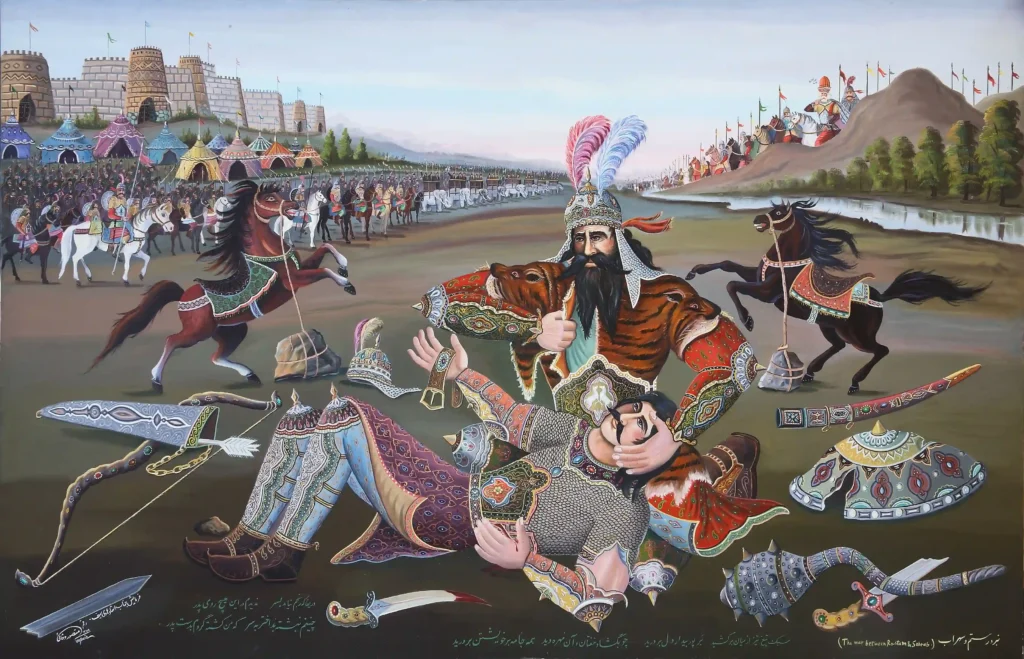
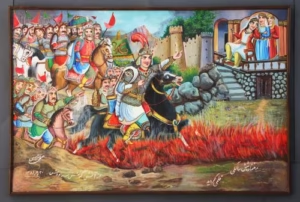
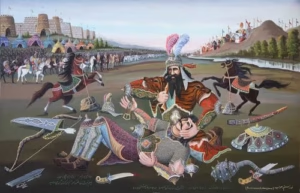
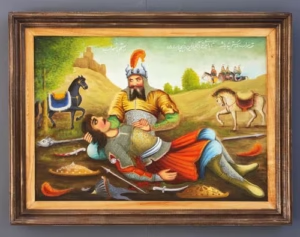
The arts of Naqqali (dramatic storytelling) and Shahnameh recitation in Ghahvekhanes played a major role in the flourishing and spread of Ghahvekhane painting. The panel “The Battle of Rostam and Sohrab” by Master Mansour Vafaei is a significant work in this style that depicts a shocking and tragic narrative from the Shahnameh. In this panel, the moment of the tragic confrontation between Rostam and Sohrab, two renowned Iranian heroes, is portrayed with warm colors and a dynamic, emotional composition. The numerous details and artistic effects of the panel clearly demonstrate Master Vafaei’s skill and command of visually retelling the stories of the Shahnameh.

Support for Ghahvekhane Painting Artists

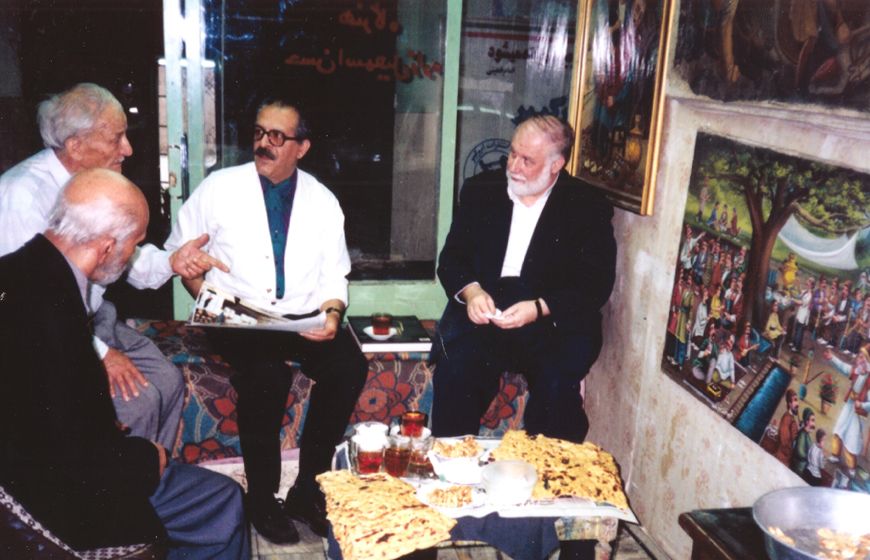
The late Dr. Hassan Habibi, with his deep understanding of Iranian culture and art, was a constant supporter of Ghahvekhane painting artists and maintained his connection with the few remaining painters of this style. Aware of Hadi Seif’s research on Ghahvekhane painting, he suggested that the remaining artists of this school gather at the Niavaran Palace Museum to have a suitable space for creating their works. This effort led to the introduction of Ghahvekhane painting as a course in universities and sparked greater attention and interest in this authentic Iranian art form.

Ghahvekhane painting, also known as “Khiyali-Sazi” (imagination-making), is a special method of folk painting that was pioneered by Hossein Qollar-Aqasi. The Qollar-Aqasi family, who were engaged in painting during the Qajar period, brought this art from the court to the people through the efforts of Alireza Qollar-Aqasi, establishing it as a distinct school in Iranian art. Hossein Qollar-Aqasi was faithful to all traditional Iranian motifs such as Islimi, Khatai, and illumination, and he strove to make Iranian characteristics prominent in his paintings.

6 items

Religious, Ashura Paintings

6 items

Epic, Battle Paintings