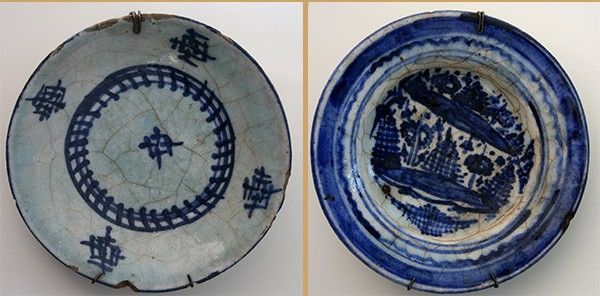
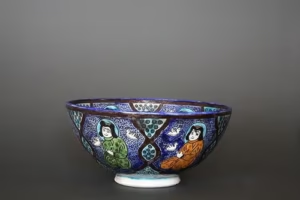
Pottery plates from the Qajar period of Mozaffar ad-Din Shah, made by the master artisan Qassai in the final years of the 19th century, display a unique aspect of Iranian pottery art. These works, with their handmade motifs and brilliant turquoise and blue glazes, speak to the beauty and high skill of Iranian artists. The geometric designs and “Gol-o-Morgh” (flower and bird) motifs on the surface of these plates are indicative of the rich pottery traditions of that era and hold a valuable place in the museum’s pottery and porcelain collection.
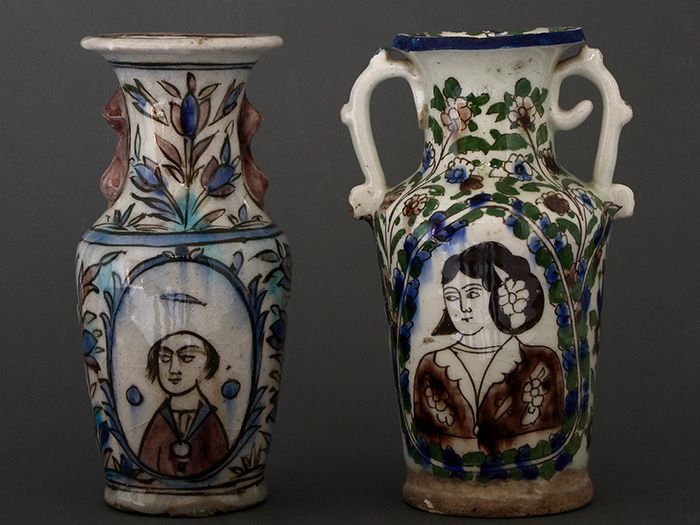
Glazed pottery vases from the first half of the 14th century, crafted by an anonymous potter attributed to the city of Meybod. These vases are decorated with handmade floral and figurative designs and glazes in shades of blue, green, and brown, beautifully showcasing the traditional art of Iranian pottery.
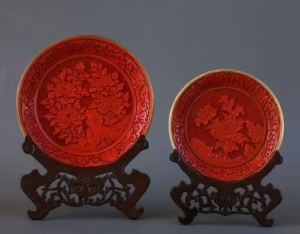
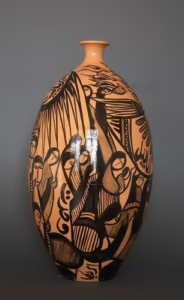
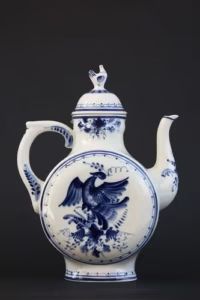
Pottery and porcelain are among the most ancient handicrafts that narrate the culture and lifestyle of people in every era. The pottery and porcelain collection of the Amirkabir Cultural Foundation comprises a unique collection of exquisite works ranging from ancient times to the modern era. This collection, with its variety of vessels, statues, and glazed tiles, is indicative of the skill and creativity of artisans in various parts of the world. From traditional Iranian pottery with brilliant glazes to delicate porcelain from the East and Europe, this collection creates a link between cultures and the aesthetics of the art of pottery.